(2,906)
Not always. Brake cleaner is a fast-evaporating solvent blend made for bare metal. Brief contact with most rubber is harmless, but soaking can swell or harden seals, and some formulations craze polycarbonate and acrylic, attack painted surfaces and lift decals. The product label states which materials to avoid, and a test on a hidden area settles doubtful cases.
Strongly alkaline cleaners react with aluminium and with zinc coatings. The surface oxide layer is dissolved and the metal underneath is etched, leaving a dull grey or white bloom that cannot be rinsed off. Using a cleaner labelled as safe for aluminium, keeping to the stated dilution, not letting the product dry on the surface and rinsing thoroughly prevents it.
No. A pressure washer should be fed only with detergents made for that use. Unsuitable products can foam excessively, attack pump seals and valves, or leave deposits in the detergent injector. Where the wash bay drains through an oil separator, the detergent also has to be separator-compatible, meaning that the oil and water split again quickly instead of forming a stable emulsion that passes through.
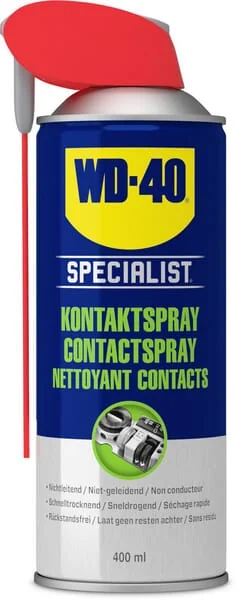
WD 40 - 49368WD40S - WD 40 Specialist® Contact Cleaner 400ml
WD-40
€13.28
Showing 1–48 of 2,906 parts
The red-bordered diamond pictograms are required by the CLP Regulation (EC) No 1272/2008 and show the main hazards of the product: for example corrosive to skin and eyes, flammable, harmful to health or hazardous to the aquatic environment. The label adds hazard and precautionary statements, and the safety data sheet gives the protective equipment, storage and first-aid details a workplace needs.
It depends on the cleaner. Solvent cleaners evaporate fully and need no rinse. Water-based alkaline and acidic cleaners leave salts and surfactants behind, and these stop paint, adhesive and sealant from bonding, so the surface is rinsed with clean water and dried completely before coating. A final wipe with a residue-free solvent is common practice before painting.