(2,426)
On a mechanical steering box, about 25 mm of free movement at the rim of the wheel is normal, and more than roughly 50 mm calls for adjustment or repair. Check the track rod ends and drop arm first, since wear there adds to the total. Hydrostatic steering has little true free play, but the wheel may creep slowly, which is a different condition.
Most boxes have two adjustments: shims or a threaded cap that set the column shaft bearing preload, and an adjusting screw with locknut on the side cover that sets the mesh between sector and worm. Adjust with the wheels straight ahead, where wear is greatest, then turn lock to lock to confirm there is no tight spot. If it binds off-centre, the gear is worn and needs replacing.
Most mechanical steering boxes are filled with gear oil, typically SAE 90 or 80W-90, to the level plug. Where a box leaks persistently through a worn seal, some workshops use semi-fluid grease as a stopgap, but renewing the sector shaft seal is the proper repair. Hydrostatic steering units have no oil fill of their own and run on the tractor's hydraulic oil.
Slow wheel creep under hand pressure at full lock is internal leakage, either across the piston seals of the steering cylinder or inside the steering unit. To separate the two, disconnect and cap one cylinder line at full lock and repeat the test: if the creep stops, the cylinder seals are leaking; if it continues, the steering unit is worn.
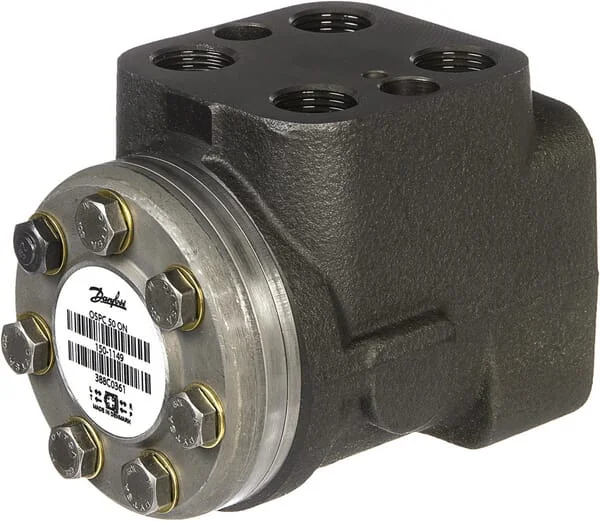
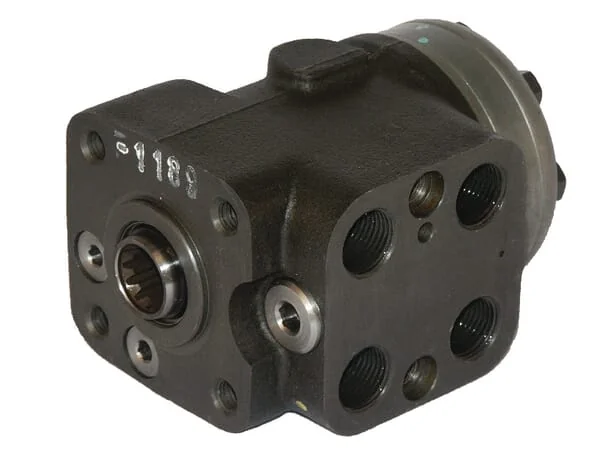
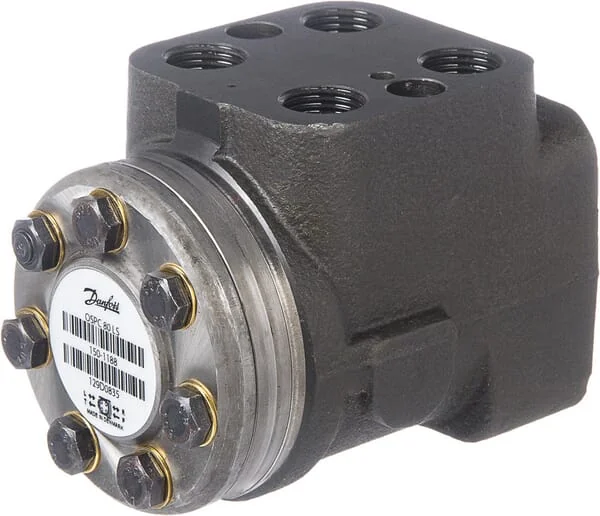
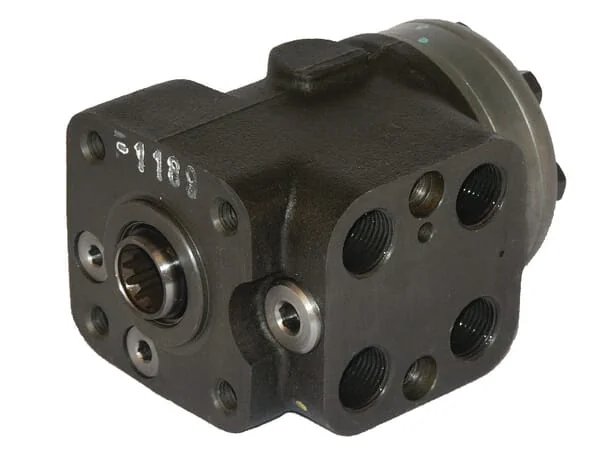
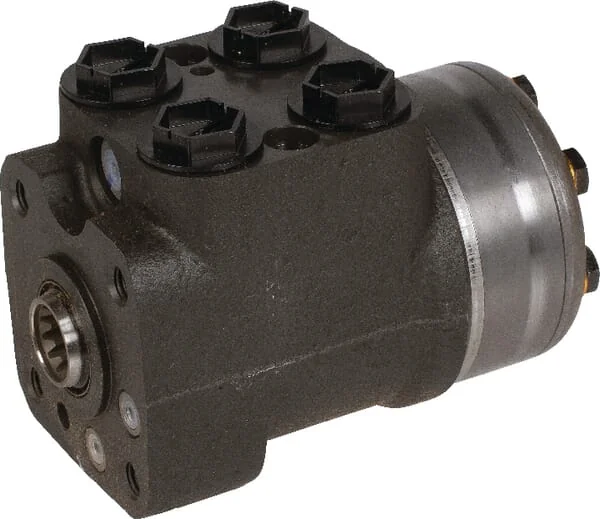
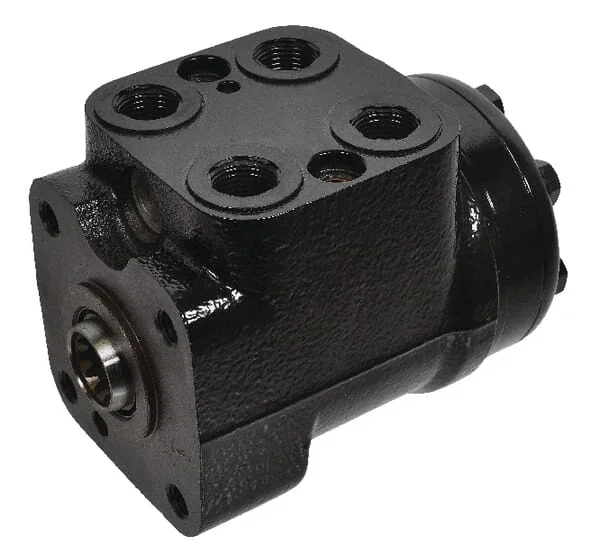
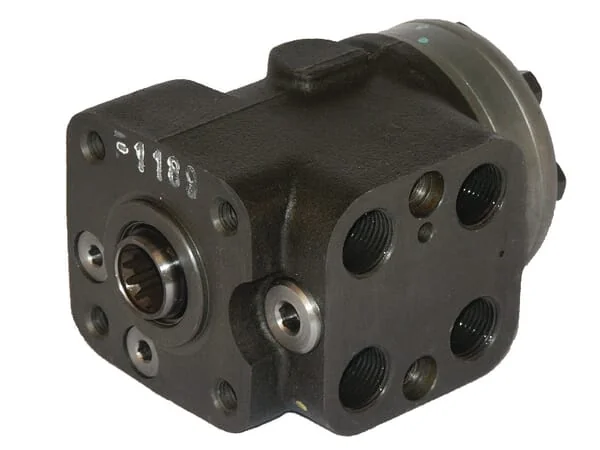
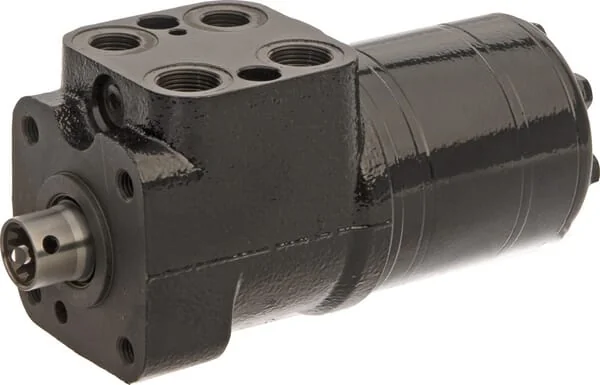
P is the pressure inlet from the pump, T is the return to tank, and L and R are the outlets to the left and right sides of the steering cylinder. Load-sensing units have a fifth, smaller port marked LS that signals demand to a priority valve or variable pump. Crossing L and R makes the machine steer the opposite way to the wheel.
No. An open-centre unit lets pump flow pass through to tank in neutral and suits fixed-displacement gear pumps. A closed-centre unit blocks flow in neutral for pressure-compensated pumps, and a load-sensing unit works with a priority valve or LS pump. Mixing types causes overheating, constant relief valve operation or no steering assistance, so the replacement must match the circuit.
Most tractors take roughly 3 to 5 turns from lock to lock. On hydrostatic steering the figure equals the swept volume of the steering cylinder divided by the displacement of the steering unit per revolution, so a unit with the wrong displacement changes it noticeably. If the count rises over time, oil is leaking internally past the cylinder or unit.
Showing 1–48 of 2,426 parts