(94)
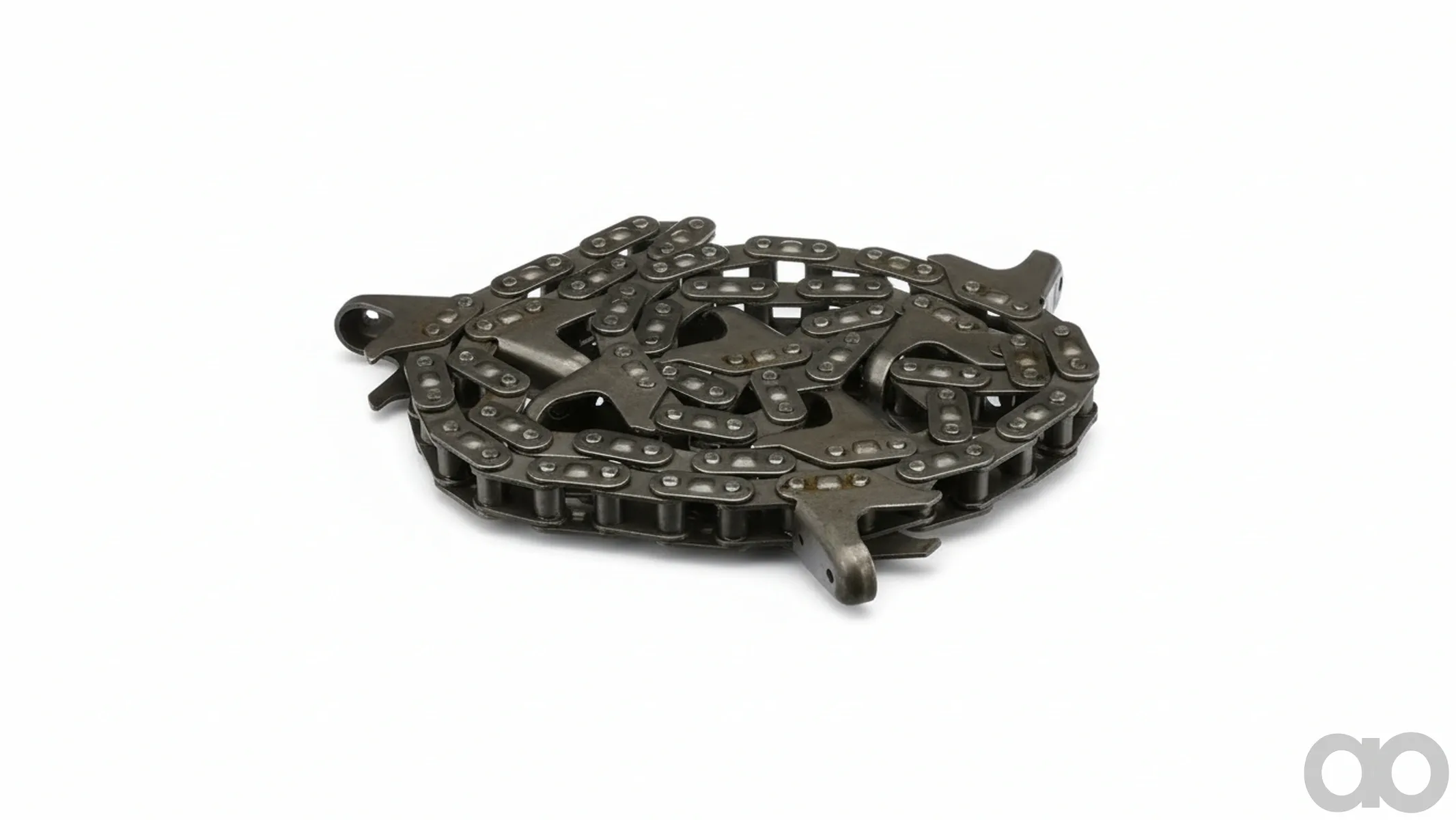
A timing chain has no fixed replacement interval on most engines and is replaced on condition. The triggers are a rattle from the front of the engine at cold start or idle, a tensioner at or near full extension, visible slack, grooved guide rails, or measured timing that has retarded. As a rough guide, a well-lubricated chain commonly lasts several thousand operating hours, and it should always be renewed during a full engine overhaul regardless of appearance.
The most practical check is tensioner extension: if the plunger is close to the end of its travel, the chain is worn out. With the chain removed, lay it flat, pull it taut and measure across a set number of links; elongation of more than about 0.5 to 1 percent over the nominal length means replacement. On the engine, a retarded camshaft position when the crankshaft is set at top dead centre is another sign, since slack accumulates on the driven side.
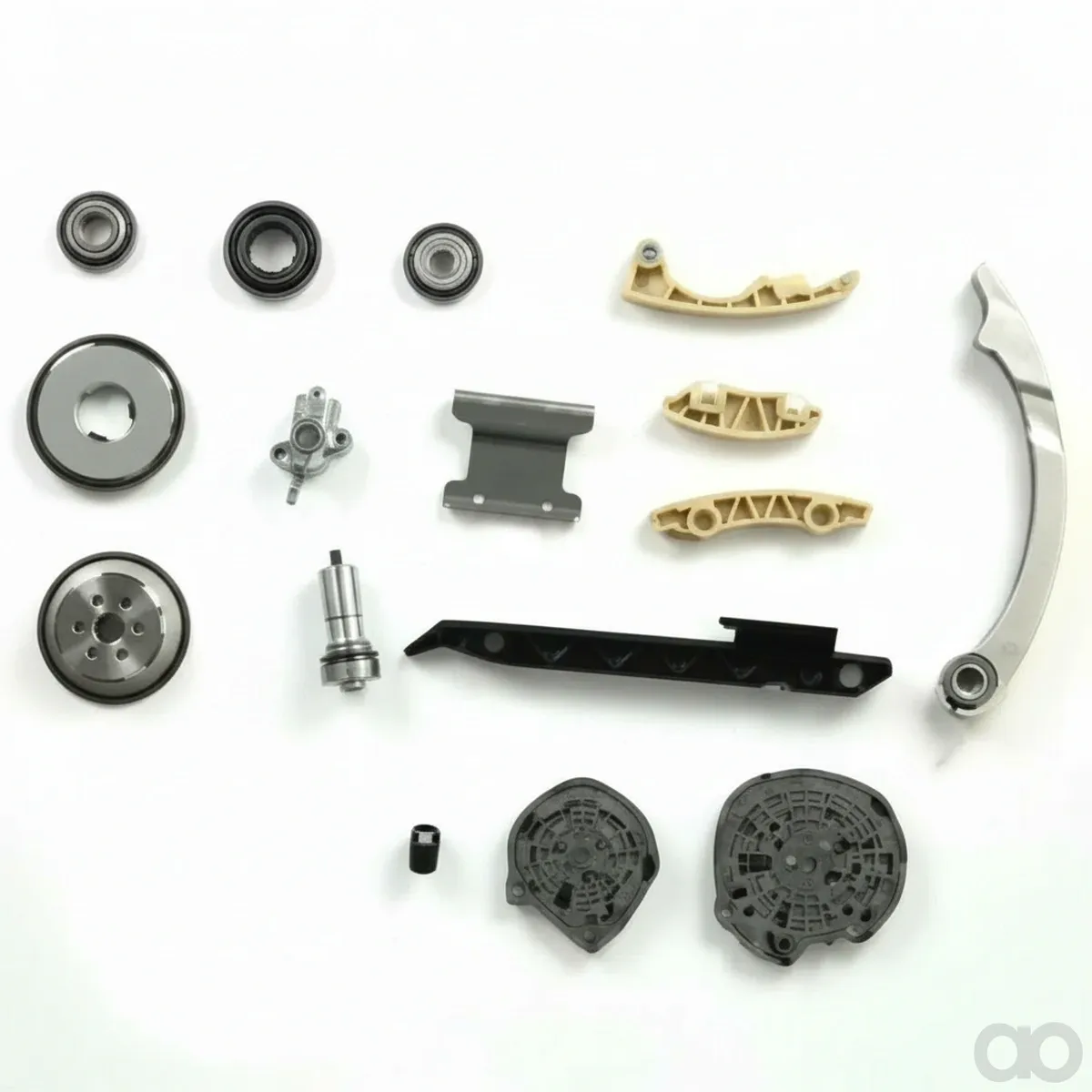
Yes. Sprocket teeth wear to match the lengthened pitch of the old chain and develop a hooked profile. A new chain does not seat properly on such teeth, runs noisily and wears far faster than it should. The usual practice is to replace the chain, all sprockets, the tensioner and the guide rails as one set, along with the front crankshaft seal and cover gasket.
A simplex chain has a single row of links and rollers, while a duplex chain has two rows side by side on shared pins, running on double-row sprockets. Duplex chains carry more load and tolerate wear better, at the cost of width, weight and friction. The two are not interchangeable, because the sprockets, guides and often the timing cover are made for one or the other.
A brief rattle at cold start usually means the hydraulic tensioner is slow to build pressure, because oil has drained from it, the tensioner is worn, or the chain is long enough to need full plunger travel. A rattle that persists at idle points to a worn chain, worn guide rails or a failed tensioner. Low oil level, the wrong oil viscosity and overdue oil changes all accelerate the problem, as the chain and tensioner depend entirely on engine oil.
Use the engine model and serial number to find the original part number, then confirm against the old chain. Measure the pitch between pin centres, typically 8 mm or 9.525 mm, count the links, note whether it has one or two rows, and measure the inner width between the plates. Record whether the chain is endless or joined by a connecting link, since an endless chain requires the sprockets to be removed for fitting.
It is not recommended. A used chain has already lost part of its wear allowance, and the labour to reach it again later far outweighs the cost of the part. A chain that has been run also beds in to its own sprockets, so mixing an old chain with new sprockets, or the reverse, shortens the life of both. Renew the complete drive whenever the engine is apart.
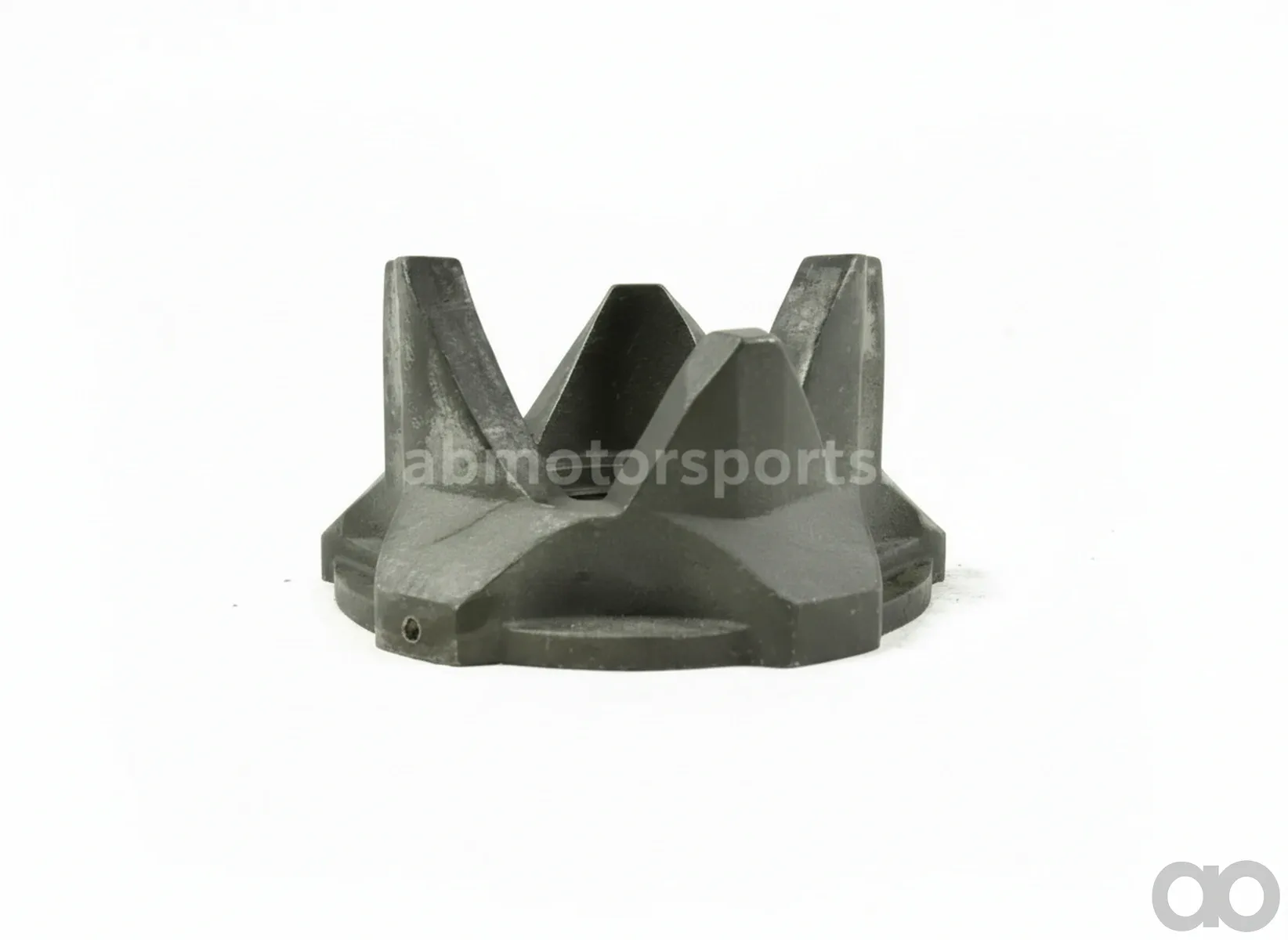
Can Am - 420280250 - Variator Cam
Can-Am
€29.81
Showing 1–48 of 94 parts