(5,131)
A working rule for the top compression ring is 0.03 to 0.045 mm of end gap for every 10 mm of bore, which gives about 0.30 to 0.45 mm on a 100 mm bore. The second ring is often specified slightly wider, and oil control rings commonly fall between 0.25 and 0.60 mm. The gap is measured with a feeler gauge after pushing the ring squarely into an unworn part of the cylinder with the piston crown. A gap that is too small is the dangerous error: the ring ends butt when hot and the ring seizes or breaks.
A piston ring marked TOP, or with a dot or letter on one side, is fitted with that mark facing the piston crown. On unmarked rings, an internal bevel on a top ring faces upwards, and a step or undercut on the outer edge of a second ring faces downwards so that it scrapes oil towards the sump. A second ring fitted upside down pumps oil into the combustion chamber and the engine will smoke and use oil from the first start.
Piston ring gaps are staggered around the piston, normally about 120 degrees apart on a three-ring piston, so that there is no straight path for gas past all three. The gaps are kept away from the thrust faces of the skirt and from the gudgeon pin bore. On an oil ring with a coil expander, the join in the expander is placed 180 degrees from the gap in the ring. Two-stroke rings are the exception: their position is fixed by the locating pin in each groove.

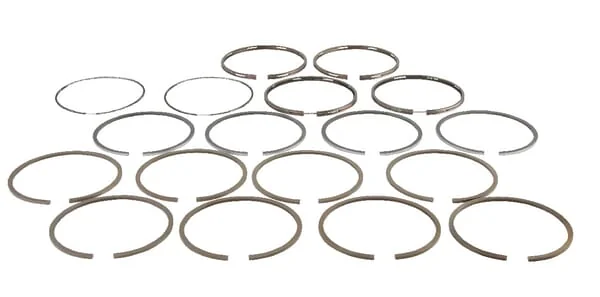
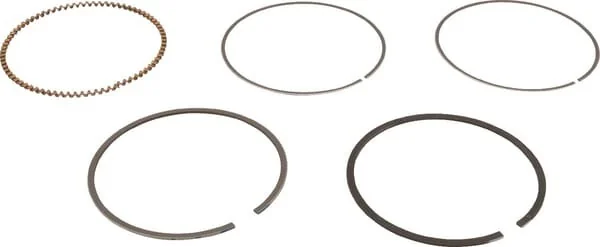
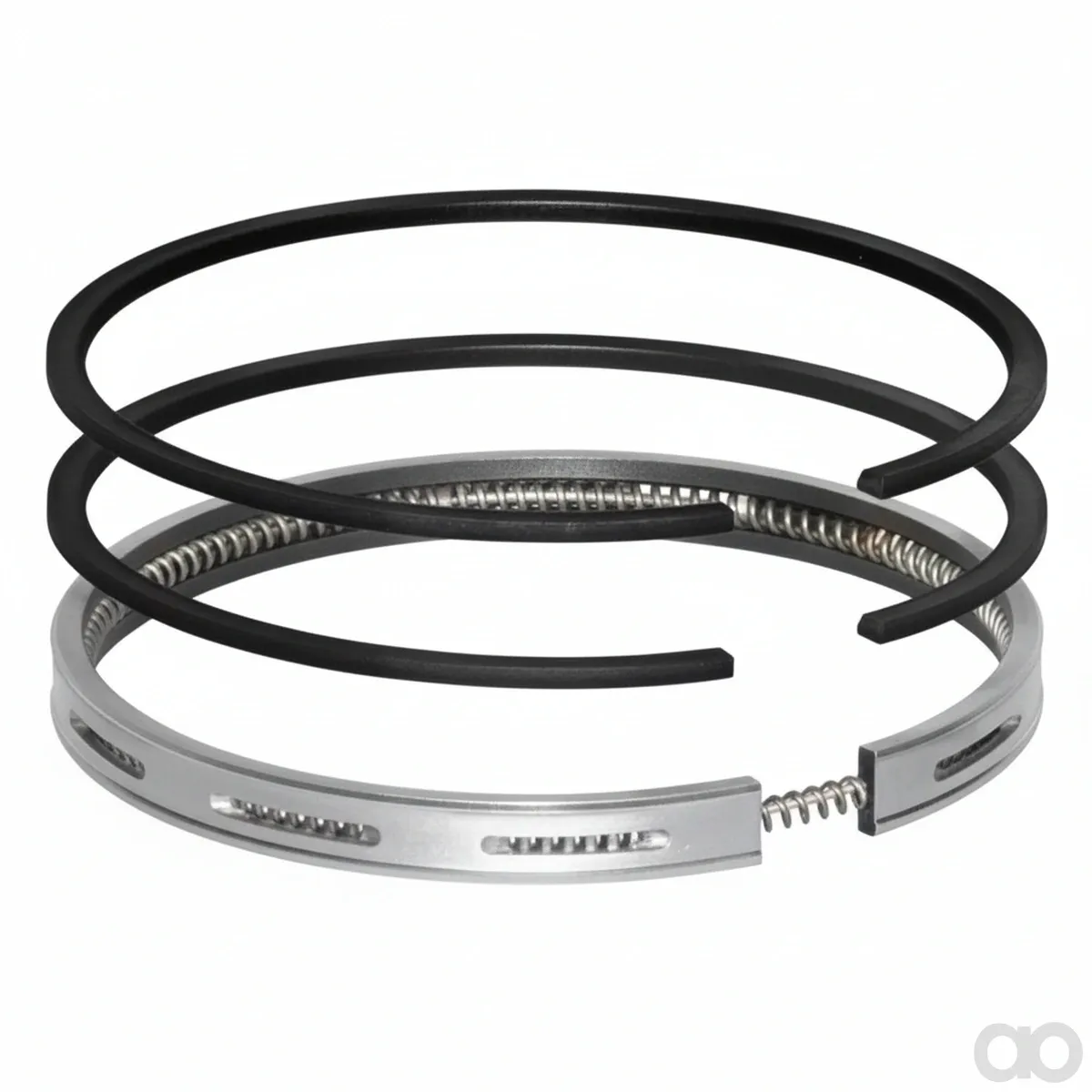
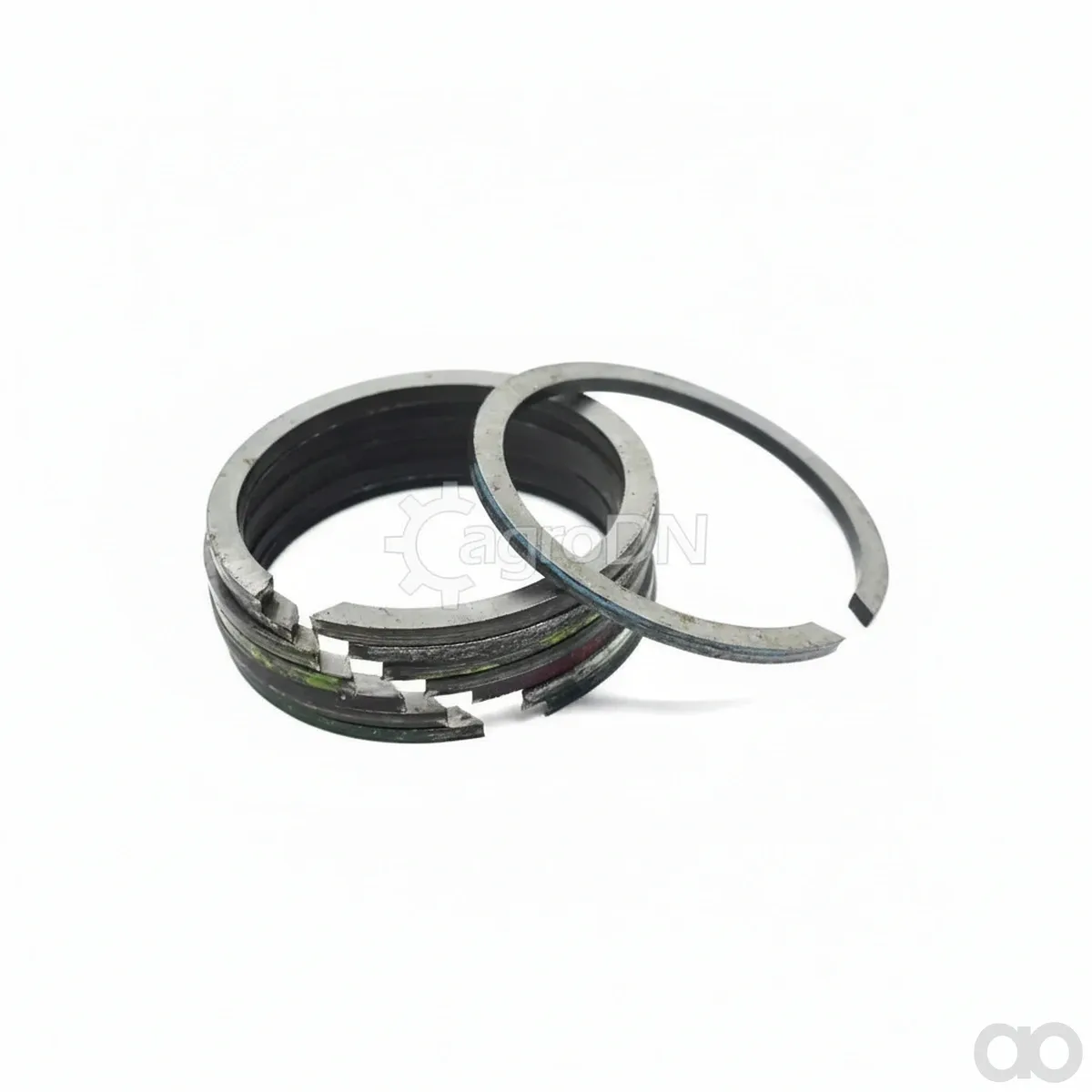
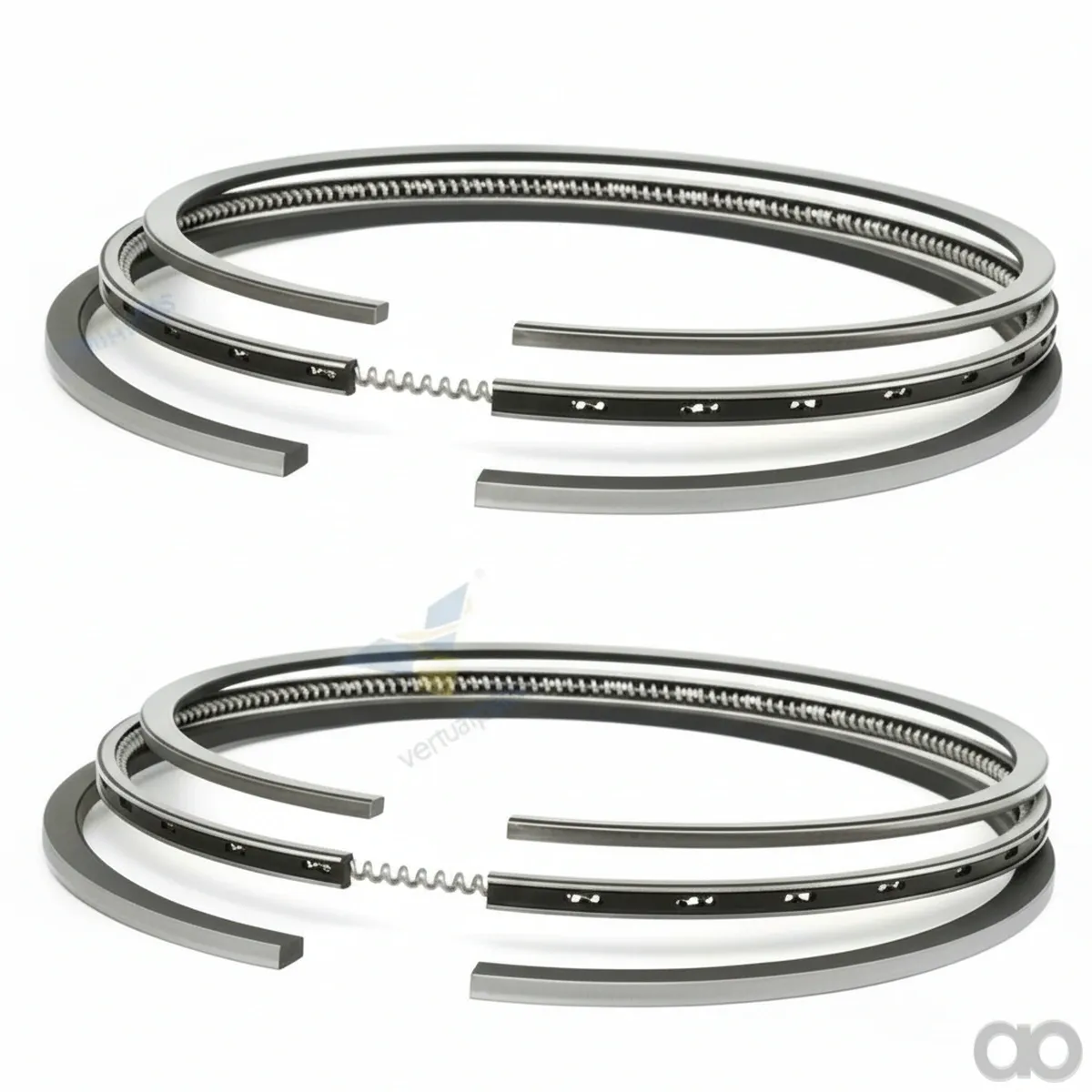
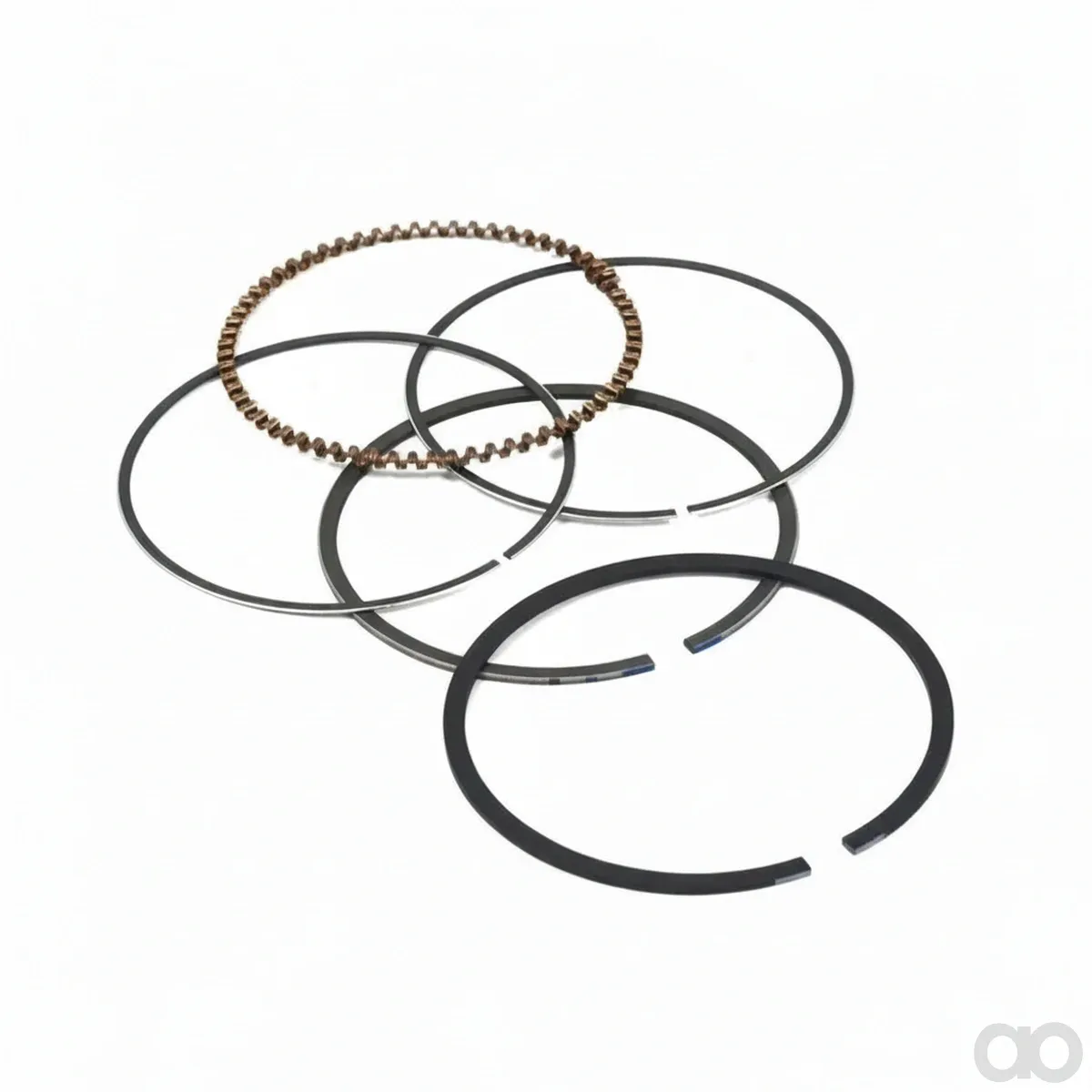
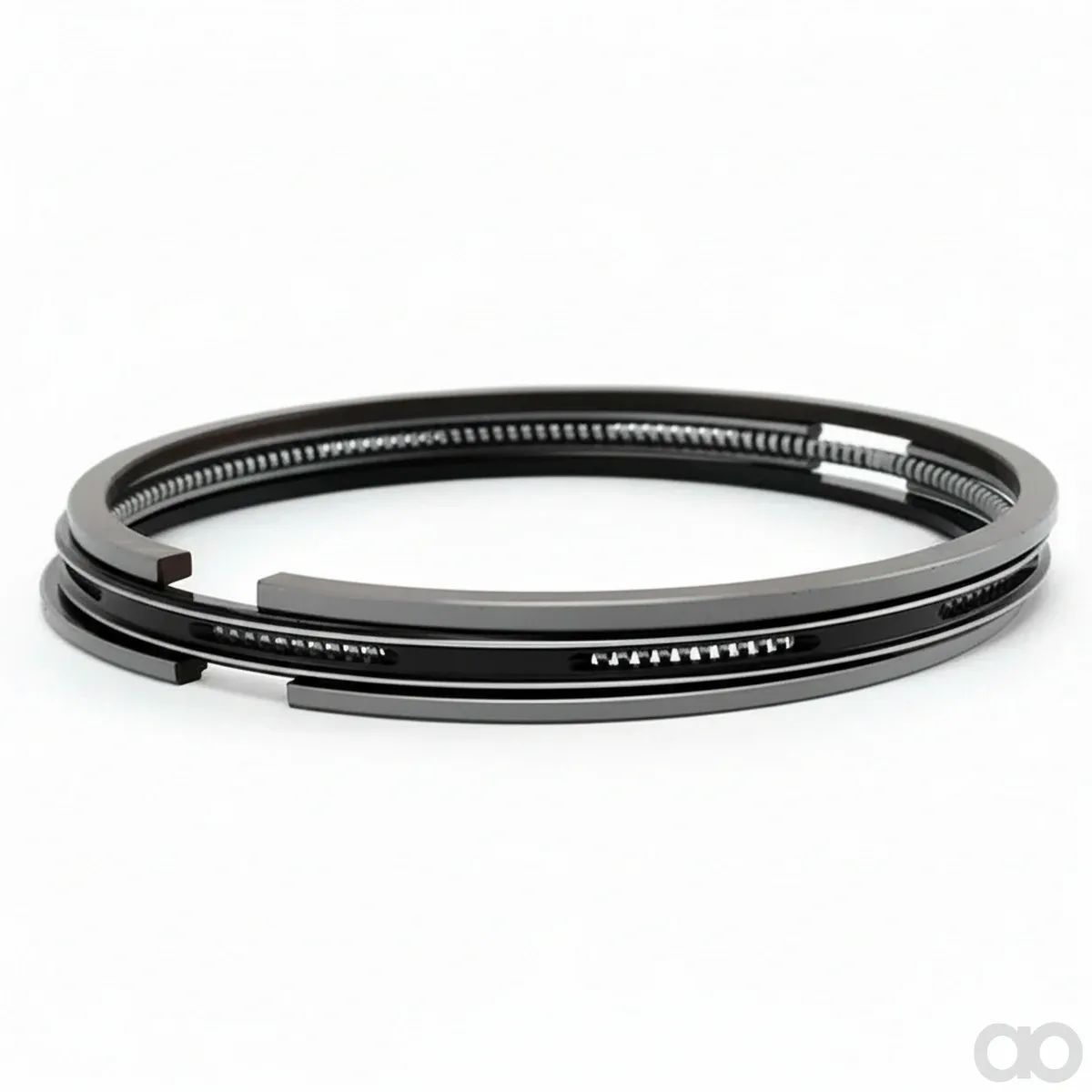
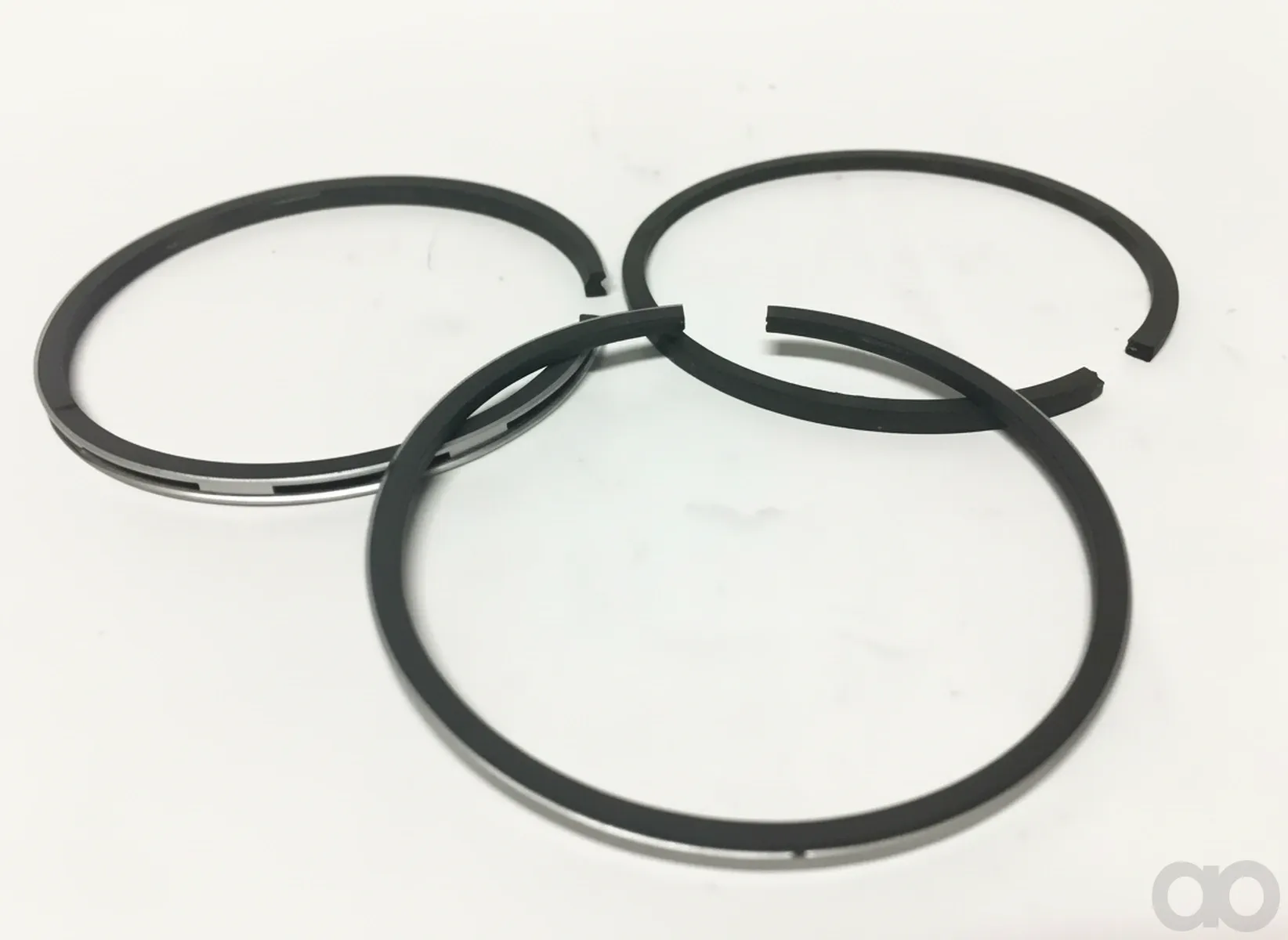
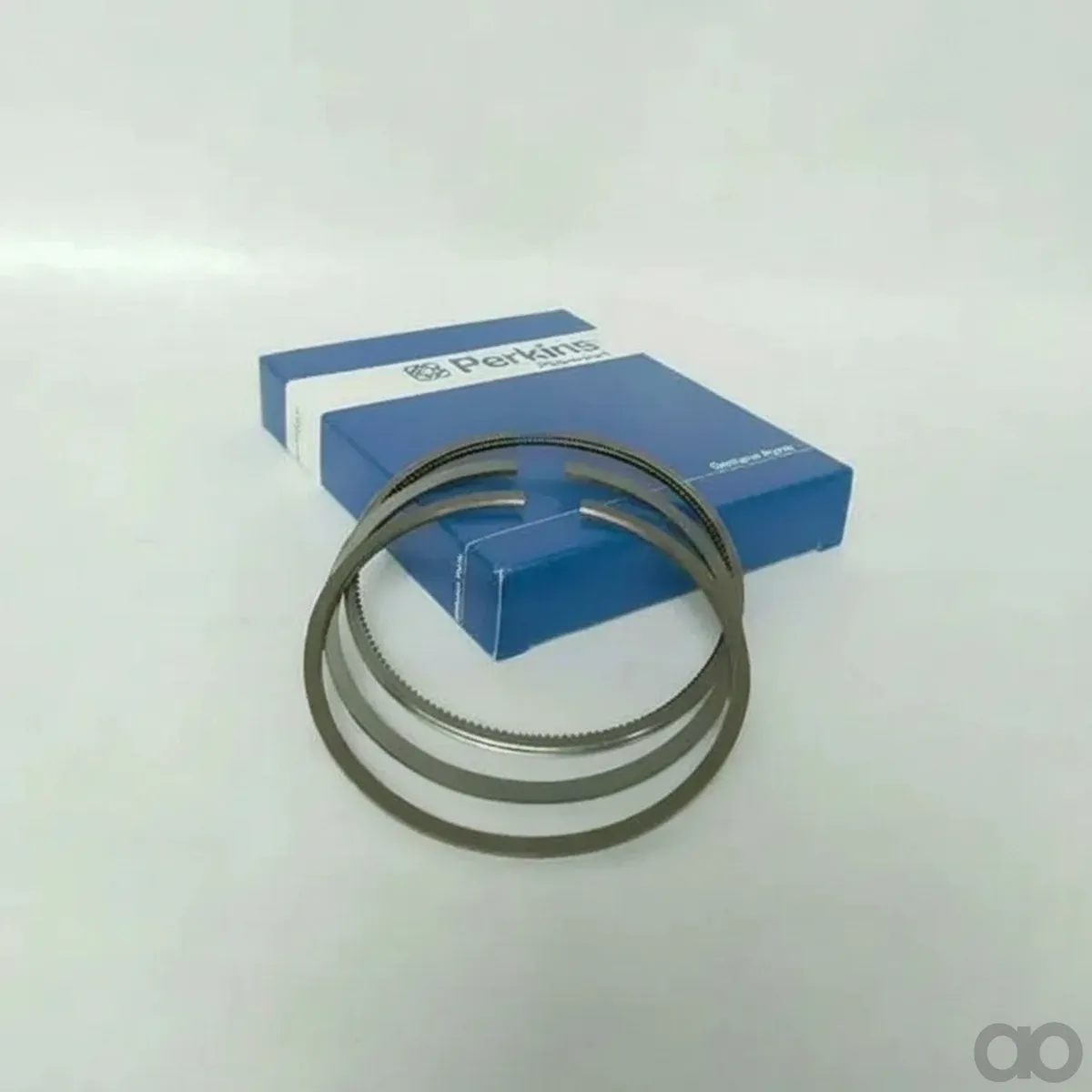
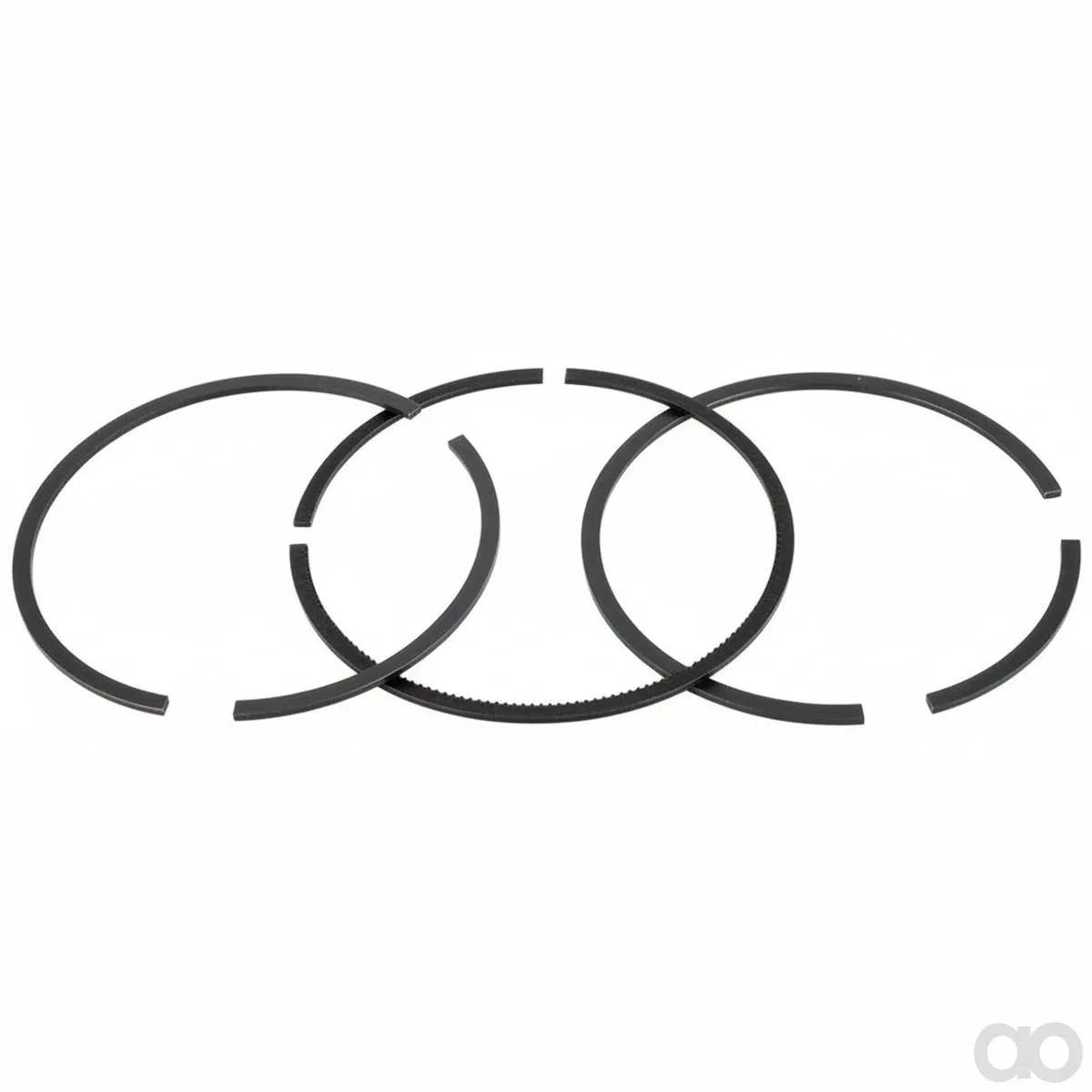
AGCO - F119200310030 - Piston Ring Set Fendt
AGCO
€98.53
Showing 1–48 of 5,131 parts
Metric piston rings are commonly offered in standard size and in oversizes of +0.25, +0.50, +0.75 and +1.00 mm, while inch-dimensioned engines use steps of 0.010, 0.020, 0.030 and 0.040 inch. An oversize ring is made for a cylinder that has been rebored to that size and is used with a piston of the same oversize. It must not be filed down to fit a standard bore, because a ring only seals when its free shape matches the bore diameter it was made for.
New piston rings can be fitted to used pistons if the ring grooves are clean, undamaged and within their wear limit. The side clearance of a new ring in its groove is typically 0.04 to 0.10 mm, and once it exceeds roughly 0.15 to 0.20 mm the piston should be replaced, since the ring will flutter and break. The cylinder must also be within its wear limits and should be lightly honed to remove glaze so that the new rings can bed in.
After new piston rings are fitted, the engine should be warmed up and then worked at varying speed and moderate load rather than left to idle, because gas pressure behind the rings is what beds them against the bore. Prolonged idling and sustained full load are both avoided for roughly the first 20 to 50 operating hours. Some oil consumption during this period is normal and should settle. An oil and filter change at around 50 hours removes the metal shed during bedding in.